noun
noun: will; plural noun: wills
1. the faculty by which a person decides on and initiates action.
“she has an iron will”
synonyms: determination, willpower, strength of character, resolution, resolve, resoluteness, single-mindedness, purposefulness, drive, commitment, dedication, doggedness, tenacity, tenaciousness, staying power
“the will to succeed”
It is almost impossible to read about Julianna Barwick without learning about her biggest influence as a musician. She grew up on a farm in Louisiana, and it was there that she would venture into her back pasture, climb into the hollow spaces of a massive tree, and sing. Her voice would reverberate and echo through the different chambers, and as she crawled though the holes and laid in its branches, the tree nurtured her desire to make soothing musical masterpieces. She calls the tree, “the magic place.”
She also spent a lot of time in church singing in a choir, and it shows. By looping her own voice on top of itself and layering them over notes of piano and strings, she paints a very pastoral mood. “Envelop,” the opening track from her major label debut, is a very good example of her style. It begins with just her voice, which she then records and loops over and over again, slowly magnifying it with simple piano, violin and cello riffs.
Given how stunningly magnificent her first proper album was, Barwick’s sophomore effort was highly anticipated, and resulted in another fantastic project, Nepenthe. The video of standout “Forever,” gives me chills every time I watch it. It shows Barwick recording the song in an abandoned swimming pool (which has been transformed into a recording studio) with an all-girls Icelandic choir. You can see the joy on their faces as they make something awesome.
Admittedly I was not excited when her third album was announced in March. Barwick’s formula is predictable and I perceived it to be stagnant and without much room for growth. But when Will was released on May 6, I was proved astoundingly wrong. It is her best album to date.
Her first and second albums were 44 and 42 minutes respectively, and while her music is gorgeous, its simple nature can grow boring in that time. Will does not have that fault, and it is the perfect length for Barwick to succinctly display her craft. In 39 minutes she packs a more emotional punch than most other musicians can in twice that time using lyrics.
For example, “Nebula,” the first released single off the album, is perhaps the most stark, somber tune that Barwick has ever written. Fittingly, the music video is very dark and haunting, and not necessarily a comfortable watch. What is truly beautiful about it, however, is every time she sings the lights come on. Voice as light is a sweet yet fleeting notion, because the darkness returns to envelop Barwick as she is forced to release the note and draw breath.
“Nebula” sticks out on Will a little like a sore thumb–it is bizarrely out of character. Among the synonyms for “will” is single-mindedness, the only relatively negative idea surrounding the word. Barwick knows that her style can at times be dull, repetitive and unbecoming of most moods, but her dedication to her art is largely positive. While she may be stubbornly making music that can be perceived as monotonous, the end result is a testament to her willpower and strength.
The following 31 minutes after “Nebula” are symbolic of this, most especially the final song, “See, Know.” The album closer plays like a victory lap, like a resounding emergence of light. Even though Barwick’s voice takes a backseat, the driving synths and percussion give the song a triumphant nature. It is the first Julianna Barwick song to include drums and cymbals, which contributes greatly to this feeling of accomplishment.
In order to understand the magnitude of this album, it is helpful to remember the magic place. The tree must be very old and wise, and did not grow in haste. Julianna Barwick did not arrive at this point quickly either, and her slow, deliberate growth as an artist has become a tribute to her childhood refuge. On Will, she shows how powerful her commitment truly is, and by the end of it she is basking in the glory of achieving her goal. And just like the magic place, she is not done growing.
On the slim chance that you are willingly reading a Star Wars-centric piece of writing on the internet and are open minded, I would like to address some of the questions that you have posed concerning the new film. If not, let this be yet another independent blogger super Star Wars fan’s post about his emotions lost to the vast nothingness of internet.
Disney bought Lucasfilm because they wanted to tap the vast pool of money that was just sitting there. George Lucas is worth over 4 billion dollars just because of Indiana Jones and Star Wars alone and I would argue he should have signed off for more than that. I am not going to sit here and pretend that the cogs are not turning because of a bunch of rich people just wanted to get richer. This is absolutely the case. Lucas–a rich pretentious filmmaker–sold his only creative genius to other pretentious filmmakers, just to be more rich.
What I seek to hint at is that is was worth it. Emotionally, culturally and progressively. Regardless of my opinion and yours, Star Wars is the most influential pop culture franchise of all time, and that in of itself is powerful.
When I was eight years of age, The Phantom Menace hit the big screen. Other than The Lion King, it was the most important movie event in my life. The original trilogy stoked the fires of my imagination and creativity: I designed the blueprints for new spaceships, I wrote my own fan fiction, I learned the importance of duality in life.
Concerning the development of my personality, I cannot stress the importance of Episode One. In hindsight and with formal cinematic scholarly tutorship, I understand the film is not good. But in the moment, in that sold out theater, my jaw hit the floor and I grew as a human being.
Star Wars is successful not just because it expands our horizons, but because it is so universal. C-3PO and R2-D2 are genderless and anyone can identify with them. Leia, even in her limited role, was given more action leeway than most women in cinema. She is directly involved in the action and is even force sensitive. Lando–an African-American–pilots the Millennium Falcon in the final action sequence. Arguably the most infamous villain in cinematic history (Darth Vader) is voiced by a Black man.
But James Earl-Jones and Billy Dee Williams (Lando) are given a faceless and minor role respectively. The two main characters in the upcoming movie are played by an African-British actor and a woman. This is really important. I can say with the utmost confidence that Star Wars: The Force Awakens will become the highest grossing film in world history with a Black and female lead. This is of critical importance. The diverse cast ensures that Star Wars will retain its mass appeal and once again be inspirational.
Another critique I have heard is that by reviving the Star Wars story line it risks becoming bland. And why can’t writers come up with something new? Well, I would argue that they are. Star Wars chronology is fresh since they Disney did away with expanded universe canon, and every new story is an original screenplay. It is not adapted.
As for those working on the project, they care about the story and they want it to affect others as the original trilogy affected them. I do not think that money is the primary motivator. After pointing out a Star Wars graphic novel in a comic book store my girlfriend told me that graphic novelists don’t make much but are passionate about the story. A coworker of mine–who is in his 40s and cannot stop collecting mint edition action figures and lego sets–told me that he was also eight when he went to see the first movie. I am currently 24 years of age and continue to be immensely affected by the franchise. Most of those working on The Force Awakens are between 20 and 50 years of age and truly want to create something that makes today’s generation cares for as much as they.
On November 20, 2008, I was eating dinner at a local Chipotle and looking out the window at a huge crowd. The vast majority of them were teenage girls, and even though some were engaged in heated “Team Edward–NO! Team Jacob!” debates, they were all united in their love for the Twilight series. I read the first book and found the writing horrifically poor but I could not contain my pleasure in seeing the long lines for the midnight showing. To paraphrase my coworker–who has lined up for dozens of album signings for her favorite rapper–seeing people genuinely excited for something is magical and fulfilling.
I do not think it is a valid argument to say “A story should not be told if it makes people rich,” or “that story sucks and does not deserve to be adapted to another medium.” Telling stories is one of the most vital cultural experiences humanity has, and I believe that this alone should outweigh the gluttonous toy sale numbers and gross consumerism that comes with them. The film industry is far from pure, but in the end, there are children who are going to watch Star Wars VII and learn something amazing and beautiful. Not to mention that I shall be sitting in rapture starting at 4am on the 17th watching all seven films in a row on the big screen. The romanticism of Star Wars’ tale of good versus evil brings people joy and whether you like it or not, millions of others identify with the story and its characters. Griping against the inevitable is futile.
This is part two in a series of posts exploring the motivations behind American punk rock lyricist and lead singer Patrick Stickles. Part one delved into the history of his band Titus Andronicus and gave a brief introduction into their first three albums. This part will focus on their newest release, The Most Lamentable Tragedy.Read part one here.
Titus Andronicus (+@) is no stranger to music that at first glance seems bombastic and overzealous. Their claim to fame was, after all, a concept album about how the U.S. Civil War is like living in New Jersey suburbia in the wake of a breakup. As silly and incompatible as that sounds, The Monitor’s success ended up proving that there were many who identified with +@’ brand of cathartic self loathing, productive flaw exploring and ostentatious yet resigned commitment. A band that is named after Shakespeare’s most infamous play, however, is still a tough sell (to put it mildly) and their most recent album relies heavily on their base. It is not a work of art that attempts to pamper to wider audience, but appeals greatly as a reverent punk rock deity for genre die hards.
Probably with that in mind, +@ announced very early that their plan was to write a 30 song behemoth about a protagonist suffering from bipolar disorder. The concept album has origins in classical music (i.e. Mussorgsky’s Pictures at an Exhibition) and bands such as The Who, Styx, Green Day, Genesis, and most famously Pink Floyd all showed that the medium could be well received, despite their intimidatingly ambitious nature. By throwing down the gauntlet and stating that he essentially aimed to match or better such darlings as The Who’s Tommy, Quadrophenia, and Pink Floyd’s The Wall he challenged himself into expressing his most powerful emotions as a musician, artist and human being. He invited all the scrutiny and skepticism that came with that ambition in the hopes that it brought out the best in his songwriting.
It worked. Just like The Monitor five years ago, Stickles and +@ have proved that no one is their rock opera peer and that they are the pinnacle of punk rock story telling. The Most Lamentable Tragedy (TMLT) is exploratory as well as a familiar home. It includes new tricks such as covers, choral arrangements and a chord organ recording on a cassette tape. And of course there are the conflicting fault exposing lyrics embedded in triumphant anthems delivered in Stickles’ trademark raging yet vindicating vocals.
Designed in five acts, TMLT is congested and risks being forgotten among tiresome clichés. But +@ was never meant for the lazy music listener, and with the help of copious footnoted lyrics (provided by Stickles himself) the original story of a man with bipolar disorder is told.
**********NOTE: SPOILERS AHEAD**********
TMLT begins with a multi-layered unison note which gets drowned out in a mother chord. This peaceful then sonically harsh transition represents the hero awakening from a blissful sleep and realizing with immense dread that a new day is upon him. After the brief opening instrumental, +@ erupts in a majestic guitar riff and Stickles begins the opera by announcing his resigned mood, “Some days start with an earthquake / the bed shakes until it breaks / and I hate to be awake.” With this opening statement, he immediately announces his psychological illness without alienating his wider audience: the dread in which we wake up to face the routine stresses of the day is a universal emotion.
The following song “Stranded (On My Own)” describes Stickles’ addiction to Ritalin. In order to even get out of bed to fulfill his responsibilities and overcome his anxieties, Stickles takes all sorts of drugs. In his own words:
“I was obligated to participate in Titus Andronicus’ National Business Tour, promoting our then-current release ‘Local Business,’ which had been recorded when the Major Depressive Episode was just a baby. This tour proved to be a blessing – I think that if I had stayed in exile out in New Jersey any longer, I might have stayed there forever, on one side of the ground or another. Unable to know that at the time, I slogged through the whole trip, clinging to my Bupropion and Abillify and my Clonazepam, thinking that if I could just keep some kind of equilibrium and ‘just not lose it,’ I could make it through this terrifying endeavor.”
And that’s only track number three. The next track “Lonely Boy” is weirdly catchy for a +@ song has the most sing-along potential out of anything on the album. Expressing his desire to be alone, Stickles sings about how other people are selfish and arrogant pricks. “Hearing people hearing themselves talk / I tell you those are fingernails where there should’ve been chalk / I heard this one guy tell this other one to suck his cock / And he was the richest, smartest guy on the block.” Against societies misgivings, +@ unfurls a white flag and declares the crippling weight of materialism and patriarchal power structures too much to handle.
I just want to be alone
I don’t wanna drown amongst the droves of drones
I don’t wanna hear that I’m what I own, oh no
I don’t wanna feel my Y-chromosome
Tracks seven through twelve make up the second act, in which the protagonist emerges from his depression. They are easily the album’s best, and as much as I want to, I will not delve into the details. Experiencing them for the first time is a gift.
The last three acts make up the second half of the album, and that is where the protagonist struggles to come to terms with his “normalcy,” encounters romance, and again slides into a deep depression.
And when he finally ventures into the world, it is imperfect, even repulsive. After briefly referencing his eating disorder as the instigator in his going out in “(S)HE SAID, (S)HE SAID,” he meets a girl who he is attracted to. He rather vulgarly and pervertedly asks her if she’d like to sleep with him over the course of two verses (she agrees), but the sad and revealing bit comes later. “You didn’t understand a single thing (s)he said” Stickles repeats over and over again. What the story’s hero needs is love and human connection, but he doesn’t know how to ask for it.
The subtleties of reading in between the dense lines of Stickles writing is one of the reasons why +@ and other pretentious rock groups are not mainstream today. “(S)HE SAID, (S)HE SAID” is a great song, but its nine minute length combined with the sly lyrical connections to earlier songs (“My Eating Disorder,” from Local Business) make it tedious for most, especially first time listeners. And with its odd pacing and darker chord structures, the latter half of TMLT test the will of even the most diligent Titus Heads.
In his review for The Guardian, music critic Alexis Petridis stated that TMLT is an honorable effort in the age of the playlist. It contains “good songs ripe for cherry-picking and tearing out of context,” but overall is a fractured and poorly paced drama who’s sheer length is wearying and “widely over-inflated.” What is particularly striking about this critique is how insensitive and uninformed it is. TMLT is a rock opera about living life with bipolar disorder. Life by experience is a series of up and downs. For those who live with mental illness, their emotional flights are followed by sometimes intensely harsh groundings. And they have no control over it. If +@’ new album were as cohesive and fluid as Petridis wants, then he may as well just put on a boring Arctic Monkeys record and call it a day.
The Most Lamentable Tragedy ends with the same unison note with which it started. For those who think that such a clichéd move is corny and lame, just know that it is Stickles’ experience. He lives an uncontrollable cycle of mania and depression, and when one ends, the other begins. As tiresome as that may be, that is the way life is.
When it comes to music video culture, weird rules out. And when the weird piques our curiosity, sales go up simply because the American public cannot resist looking. As proof, look no further than Lady Gaga’s latest involvement, American Horror Story: Hotel. The show’s negative reviews after the first episode appeared to prove that story and substance still play an important role in the consumption of art, but nonetheless the second episode earned the second best rating ever for a telecast on the Fx network.
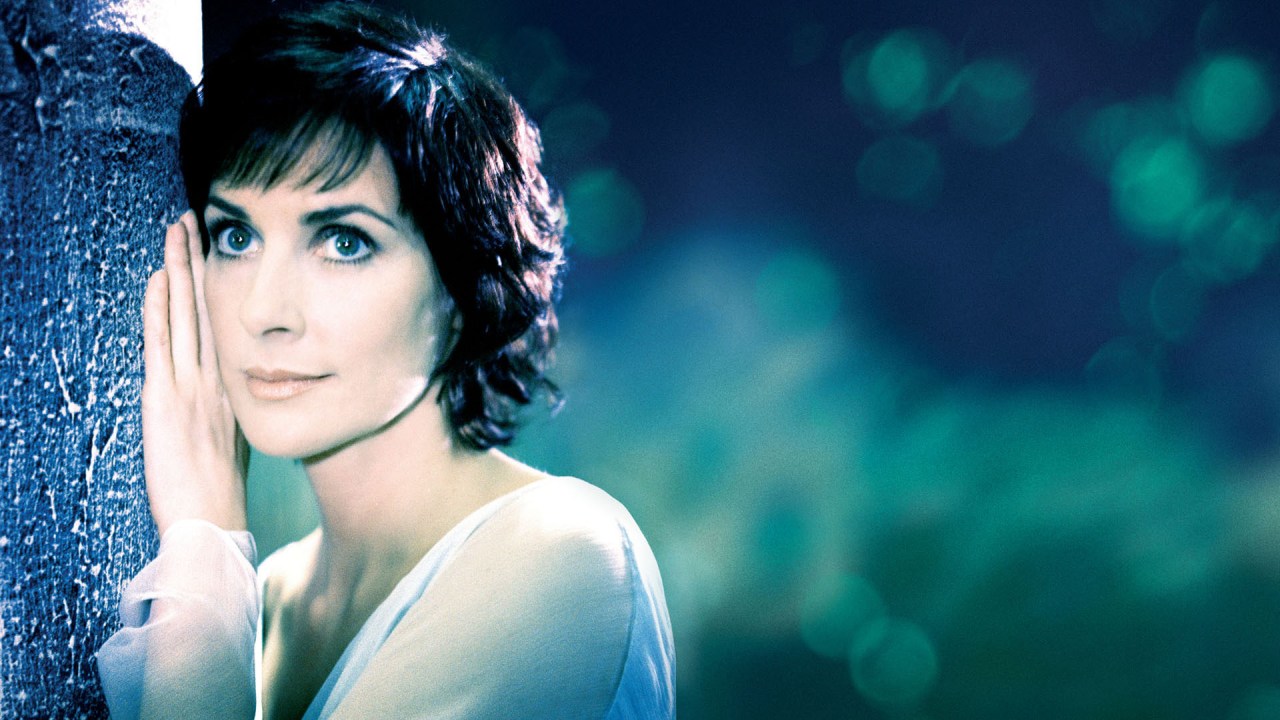
Meanwhile, Madonna is trying too hard to remain relevant with the same weird formula that she has relied on in the past, and, alas, it is working. Her new video has close to 134 million views. What really is depressing about her new effort is the desperation. The fact that she felt the need to include dozens of celebrities lip singing “bitch I’m Madonna” is just a really sad effort to create popularity. Enya, on the other hand, has not released an album in seven years and has the same number of albums sold as Beyoncé.
Granted, Enya has been around for much longer than Queen B, but in today’s day and age of trying to get rich as quickly as possible, her music feels like a cleanse, a baptism for all our sins.
“How long your love had sheltered me,” she sings, perhaps thinking upon how her loyal fans had given her enough wealth to lay low awhile. This might be reading too much into the lyric, but Enya has never been one to forget her fans. “Let me give this dream to you, each night and evermore,” she continues.
While Madonna and Beyoncé are praised for their studio productions and collaborations, Enya’s recording process takes an average of three years. This separates her from all of her peers. Taylor Swift is on her 1989 tour and is writing all of her new material while tired and on the road. She’ll release her next album as quickly as possible, as she has for all of her works. If other prominent pop artists took as much time as Enya to write, produce, and refine their music, the radio would be filled with lasting, meaningful songs instead of fads.
Enya has only released two songs from her forthcoming album, but it already feels like she is making a point: music is not meant to be fast food. The last time I consumed her music so readily was during a particularly stressful finals period in college.
And it is no accident that the last time I heard Enya’s soothing voice was during a family Settlers of Catan game. This is why she is the comeback artist of the year in November. We are going to stress out over the holidays and over life in general, but we should all take a moment and relax. Everything will work itself out and it will be fine.
This morning I had the pleasure of seeing Pixar Studio’s Inside Out for the first time, and I left the theater with tears lingering in my eyes, amazed by the sheer emotional weight of what I had just seen. My parents and I hit up the too-good-to-be-true $2.75 11am showing at the Frederick Holiday Cinemas, along with dozens of families with tiny kids trying to beat the somber, very gray rainy day. The partner feature across the way, Minions, was definitely more crowded, but we were still surrounded by dads, moms and kids munching on popcorn.
After receiving nearly unanimous critical acclaim and breaking all sorts of box office records–not to mention the effusive word of mouth hype–I sat down knowing that Inside Out was going to please me. Well, I was wholly unprepared. It left me–for lack of a better word–feeling. And not only was I feeling emotions intensely, I was feeling them all at once.
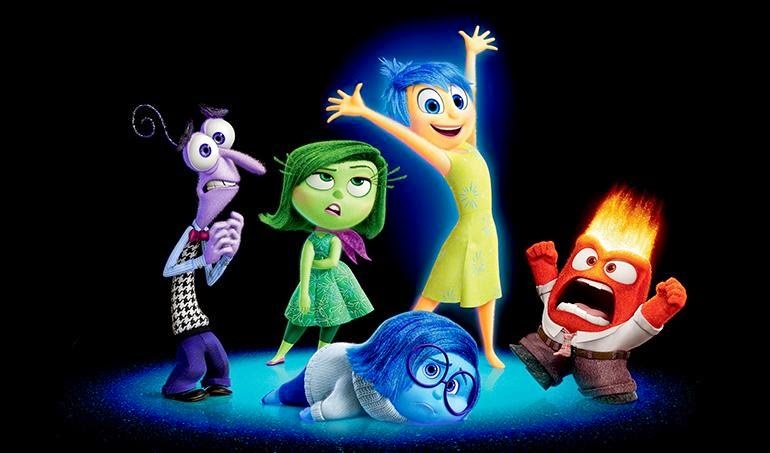
The movie follows eleven year old Riley, who up until the movie’s predictably typical yet satisfyingly effective plot device has enjoyed a wonderful life growing up in Minnesota. Her emotions of Joy (Amy Poehler), Sadness (Phyllis Smith), Anger (Lewis Black), Fear (Bill Hader), and Disgust (Mindy Kaling) are all personified and housed in a “control center.” Along with other personifications of parts of her brain, her emotions navigate life through her experiences, doing their best to absorb the memories each day creates. While each emotion has their own personality, together they are what makes Riley herself.
Do not worry, the film is actually more complicated than that, and that is the best part. When operating at its best, Pixar manages to take compelling, complicated subject matter and deliver it through a medium that is close to universal but not watered down. For example, taking something as trivial as a “train of thought” and literally turning it into a train that uncontrollably wanders around Riley’s head is not dumbing down how the human brain works, it is an accurate portrayal of how we think.
Perhaps the only critique that Inside Out has received is that it comes dangerously close to flying over kids’ heads, and it will for some. However, that is precisely the point of the film and part of the reason why it is Pixar’s magnum opus. As human beings, our brains and our emotions work in such a way that we are constantly changing and evolving. At the age of eleven, Riley’s personality and maturity is in a state of flux and by the end of the film, she is not the same person that she was at the start. How do you think that affects her emotions?
It is the genius question that drives the film and turns it into one of the greatest films ever made. A debatable opinion to be sure, but at the very least it deserves best picture. By making a movie about emotions, Pixar has managed to create arguably the only film that every human being on this earth can relate to, and I can think of no better reason why everyone should see Inside Out.
Earlier this year in March, I wrote a post about my alma mater Oberlin College canceling a show. Viet Cong was scheduled to perform at the ‘Sco but students protested because of the appropriative, racist nature of the name. I supported the decision briefly, citing Oberlin’s cap and gown tradition and the disgusting, offending nature of the name towards the many Vietnamese who were killed in the Vietnam War.
Well, the band released a statement early Saturday afternoon announcing their intent to change their name.
Our band lives to play music. We don’t particularly like doing press, most of us are fairly private people and we have social media for the band only reluctantly. Most of us generally don’t follow online criticism. Over the last year we have essentially lived our lives in a tour van and in music venues, playing over 130 shows. In that time we’ve met many amazing people and had many great conversations with people in person.
Over this time we’ve been listening, talking and having lots of valuable conversations with the members of the Vietnamese community about the name. Through this dialogue and hearing about what the name means to so many people, we have decided we will be changing the name of our band.
Art and music are about creative expression. However, our band name is not our cause, and we are not going to fight for it. This is not what our band is about.
There are many individuals more eloquent than us who have recently had a lot to say about the topic of the name and our appropriation of the name Viet Cong. For more insights into the arguments we encourage you to read some of these. We are a band who want to make music and play our music for our fans. We are not here to cause pain or remind people of atrocities of the past.
The truth is, we’ve been planning to change the band name for the next record for months; it has not been an easy decision by any means. We are a band of four people with four individual voices; this debate has been long and difficult for us and it took time for everyone to settle on a plan of action.
We don’t know what the new name of our band will be, and we owe it to our fans to honour the concerts we have booked. We rushed into our last band name decision, we don’t plan to rush into this one, but know that will be rolling out a new name as soon as we agree upon one.
We realize this won’t satisfy everyone, but that’s certainly not the goal of this band. We never expected this kind of attention in the first place and just want to return to playing music, which is the only thing we (kinda) know how to do.
We’ve had an incredible amount of support from fans, and we have to thank everyone who has said supportive words to us as we struggle with this. As always, we welcome people talking to us in person.
– Matt, Mike, Monty & Danny.
While this is fantastic news, it sucks that it took this long. Whether or not this is genuine or largely from a PR perspective, the band still has not publicly apologized to the Vietnamese community and the tone of the announcement makes it seem like they are the victims here.
N.W.A. first popped up on my radar in the seventh grade. I was in my woodworking class sitting next to a Black kid who with the exception of rhythmic mutterings under his breath was silent. I do not remember his name and we hardly spoke. I think we both took comfort in the soothing sounds of a dozen sanders, the smooth feeling of finished wood under our fingertips, the absence of a teachers’ droning. In the socially exhausting routine of middle school, woodworking was our sanctuary.
I do not recall what our exact assignment was, but the boy next to me was carving something into his project. I was curious, but was afraid to ask. At any rate, I would see what the writing was eventually. Unfortunately, the teacher dropped by and asked him point blank what word he was etching in the wood. The boy seemed at first to cringe, but then he sat up in his chair and said with sass, “N.W.A.”
He got in trouble and was forced to replace the piece.
I was thoroughly perplexed. At the time I did not question the teacher’s authority to do such a thing but I wanted very badly to know what the three letters meant. I spent the rest of the workshop summoning up the courage to talk to him, and when the bell rang and we were in the hallway a safe distance from the class, I asked him what N.W.A. meant.
He looked at me, flashed a smile, and gave their full name. After thanking him for enlightening me I walked to my locker and thought to myself, “well, no wonder he got in trouble.”
The seventh grade was when people started to call me “Dan Dan the Music Man” because I spent a lot of my time singing. My musical taste was rudimentary–I listened to what my dad did, sought out musicals, and had yet to choose the 2000s over anything else. But when the cute girl asked me what my favorite genre of music was I would lie straight-faced and say rap. For someone who had 3 years to go before he even came close to puberty, I did anything to feel cool.
I did not fake it hard at all though. I did not go home and look up songs by N.W.A. I wish I had that day though, because it would have given me an introduction to the pioneer of a crucial and relevant musical genre in American history. At twelve years old I certainly would not have understood the socio-economic and racial importance of the hip-hop group N.W.A., but it would have helped me talk to that kid in woodworking and perhaps we would have become friends. Perhaps he could have introduced me into the harsh realities of their music and our world.
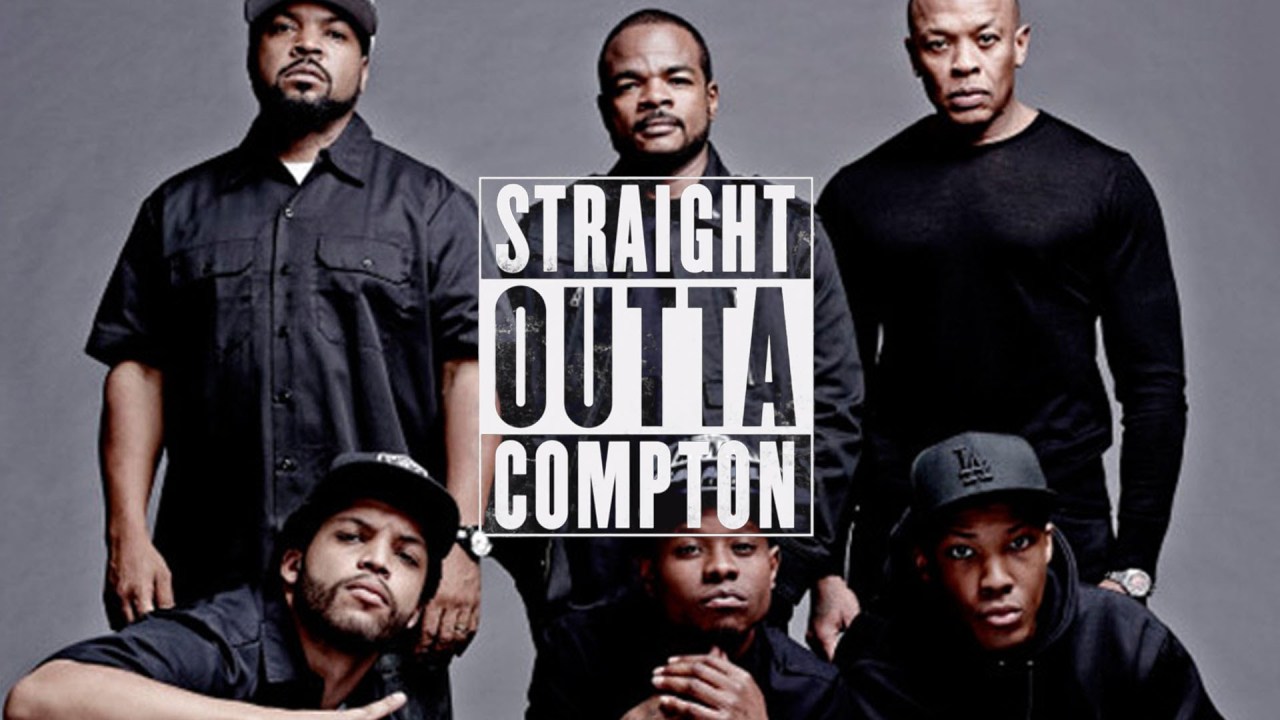
The highly successful N.W.A. biopic opened in theaters two weeks ago and the music lover and critic in me was absolutely salivating at the opportunity to see it. The empath in me also became very aware of the intense feelings the movie would provoke. Last week I went to see the film with my little seventeen year old brother–who is a more savvy rap fan than myself–and it was quite an experience.
From the opening sequence, the entire film shows the artistic motivations of N.W.A. It is terrifying and infuriating to be Black in an inherently racist system, where the most viable ways to earn a living are illegal, and that no matter how successful they are, the struggle never stops. Juxtaposed over various racially motivated acts of violence and other illicit activities, N.W.A.’s story is at times difficult to swallow. But the film itself is so captivating that looking away would itself be a crime. For someone who is so deeply affected by music, to see so many people brought together with gangsta rap was magical.
On the other hand, this is a biopic about a group that raps lyrics such as “So what about the bitch who got shot? Fuck her! /
You think I give a damn about a bitch? I ain’t a sucker!” and, “So we started lookin for the bitches with the big butts / Like her, but she keep cryin’, “I got a boyfriend,” Bitch stop lyin’ / Dumb-ass hooker ain’t nuttin but a dyke.” Rap has a notorious history with misogyny, and that was on full display in Straight Outta Compton. Women are reduced to nothing but objects to be used and then discarded. The crucial detail left out of the story, however, is producer Dr. Dre’s assault of journalist Dee Barnes. The film’s portrayal of women is accurate, but to leave out Dre’s history of abuse left her “like many of the women that knew and worked with N.W.A.: a casualty of [the film’s] revisionist history.” The brilliance of the film comes from its moments of authenticity, and F. Gary Gray decided to tarnish his movie by treating an important case of violence against women like a footnote.
You can make five different N.W.A movies. We made the one we wanted to make.
–F. Gary Gray
Furthermore, Dr. Dre should not have been allowed to executively produce the movie along with Ice Cube. That is gross conflict of interest. I highly encourage everyone to read Dee Barnes’ personal essay on this issue here.
Despite the glaring omissions, I paid to go see this movie because it was made by Black people for a Black audience and was not stereotypically offensive. In Hollywood, the number of movies with the majority of the cast people of color is horrifically and inexcusably low. So low in fact, that when a Black biopic largely set in Los Angeles is released, the police beef up security at the theaters. This precise kind of ingrained, institutional racism is what makes Straight Outta Compton so relevant and so powerfully good. To this day the police are intimidated by mainstream art made by and for audiences of color, which is so rare that it’s treated like a terrorist plot. In 2015, the LAPD have shot 25 people and killed 13, but there have been no acts of gun violence by Black theater audience members in Los Angeles in the same year. So as N.W.A. would say, fuck the police and go see the year’s best movie.
I’ve thought a lot about that day in woodworking in the recent weeks. My pretentious response to a boy etching in an acronym for a empowering rap group name was an ignorant one. The real reason he got in trouble was because the white teacher’s socially and racially motived power dynamic was in jeopardy. In an inherently racist system the Black boy was not allowed to express his interests in art that upset the status quo. He was also afraid of something that exposed his privilege and of music that did not represent himself. Straight Outta Compton is a magnificent portrayal of a crucial chapter in American musical history that is sure to make people uncomfortable. As a result it is poignant and provocative and invites engaging in debates about several important issues relevant to life in the United States.
Google Titus Andronicus’ latest record The Most Lamentable Tragedy and you will find that most–if not all–of the reviews include a reference to singer Patrick Stickles’ manic depression. I have cringed at those innacuracies, because as a genuinely fervent Titus head I need to get the mental illness distinction corrected. To be bipolar means the person experiences ups (mania) and downs (depression) in extremes, sometimes in quick succession. Therefore “manic depressive” simply means bipolar. Because I am the only fan/critic who has decided to point this out, mine is the only opinion that matters.*
In all seriousness though, living with bipolar disorder is difficult. Stickles has lived its struggles, and because of that he wrote an album that not only must be heard, but also cements Titus Andronicus as the best American rock band this side of the millennium.
There is not a doctor that can diagnose me
I am dying slowly from Patrick Stickles disease
–“No Future Part 1” The Airing of Grievances
In order to better understand the mind from which The Most Lamentable Tragedy (TMLT) was spawned, it helps to brush up on the band’s history. Titus Andronicus’ (or +@, their preferred acronym) first album, 2008’s The Airing of Grievances, introduced the world to the band’s pretentious multidisciplinary education. They encouraged listeners to surround themselves with lyric sheets, works of literature, philosophical manifests and pieces of art when listening to their music.
Pieter Brueghel’s sixteenth century “Landscape with the Fall of Icarus” depicts the Greek myth in which boy Icarus succeeded in flying using feathers secured with wax. Ignoring his father Daedalus’ warnings, Icarus flew too close to the sun, melted the wax, and fell into the sea and drowned. His legs can be seen in the water just below the ship.
“Upon Viewing Brueghel’s ‘Landscape With the Fall of Icarus,'” for example, is about Stickles realizing that if something horrible were to happen to him, life would go on: “I was born into self-actualization / I knew exactly who I was / but I never got my chance to be young.” Perhaps he laments becoming the oblivious man plowing while the man he wanted to become is drowning in the realities of the world. Stickles draws heavily from his own experiences and neuroses, but also feels the need to passively seek out those who are know and understand his references– or at the very least introduce his audience to some essential cultural artifacts.
The Airing of Grievances also includes two spoken monologues. The first is none other than Titus Andronicus’ famous soliloquy from the character’s eponymous revenge tragedy by Shakespeare. The second is the final paragraph of Albert Camus’ novel The Stranger, in which the main character “lays his heart open to the benign indifference of the universe.” As a senior in high school who was unhappily forced to read the French literary classic as part of the curriculum, I now marvel at the bittersweet significance of such a line. For Stickles, it highlights his rage against the meaningless of his existence.
I will be as harsh as truth, and uncompromising as justice. On this subject, I do not wish to think, or speak, or write with moderation. I am in earnest, I will not equivocate, I will not excuse, I will not retreat a single inch, and I will be heard. –William Lloyd Garrison, as quoted in +@’s “A More Perfect Union.” The Monitor
Not to be deterred by critics who disapprovingly spat on +@’ overstuffed lyrical content and entitled scholarly wisdom, Stickles wrote a concept album that used the American Civil War as a metaphor for a failed relationship. As overambitious as that sounds, the project was not a dud, and it became the perfect vessel to deliver the band into the spotlight. Not only does it include defiant abolitionist speeches, but it delves into Lincoln inaugural addresses, the anxieties of Confederate President Jefferson Davis and the poetry of Walt Whitman. And that’s just the tip of the iceberg.
Still lauded as the band’s best record by critics and worshipped by Titus heads, The Monitor (2010) did much more than rehash American history. On “Four Score and Seven,” Stickles begins by defeatedly singing “This is a war we can’t win / after ten thousand years it’s still us against them.” Sure, the Civil War ended, but man has always been killing man over societal inequalities and territorial or power disputes. Stickles sang about it on The Airing of Grievances as well: “When called to answer for their crimes / the only response that they could find / was that it seemed to be a good idea at the time…and the cries of the helpless were never, never enough” (“No Future Part Two: The Days After No Future”). Questioning senseless violence for the sake of the American dream might seem like a liberal trap, but Stickles spares no one. He is not interested in purity because he knows it does not exist. No one is flawless and we are all part the same species and therefore guilty by association.
There’s a way to live the values your forefathers gave you
Prepare to be told “that shit’s gay dude,” but I guess that what they say is true
And there is no race more human, no one throws it away like they do
These kinds of lyrics still ring painfully true, but the true genius behind The Monitor’s success were the abreactive anthems and exuberant mantras. Somehow +@ managed to turn cries of “the enemy is everywhere,” “it’s still us against them,” “it’s alright, the way that you live,” and “you will always be a loser” into transformative cheers of acceptive love. The silliness of repetitively yelling these choruses over roiling drums or catchy guitar licks is the exact kind of thing that defines Stickles’ writing style: mania and depression performed simultaneously. Perhaps the most poignant example of this comes at the end of “No Future, Pt. Three: Escape from No Future.” After all band members chant “you will always be a loser” thirty times across a ridiculous number of bars of music (not unlike protesters or fans at a sporting event), Stickles affirms, “AND THAT’S OKAY!”
+@’ triumphantly epic and powerfully cathartic sophomore release vaulted the band into indie rock stardom, but also threw Stickles into a deep depression. Perhaps he dwelled too much on the follies of man which he raged against.
Solidarity’s gonna give a little less than it’ll take
Is there a girl at this college who hasn’t been raped?
Is there a boy in this town that’s not exploding with hate?
Is there a human alive ain’t looked themselves in the face without winking
or saying what they mean without drinking
who will believe in something without thinking, ‘what if someone doesn’t approve?’
Is there a soul on this earth that isn’t too frightened to prove?
Out of that depressive iteration of Stickles’ bipolar disorder came +@’s third album, Local Business. Released in 2012, Stickles reveals more details of his troubled life:
Drug addict since single digits
Vitamins to fight the fidgets
They put something in my applesauce but I found it
–“My Eating Disorder”
At the age of four, Stickles’ parents started to hide Ritalin in his food. This forced him to question the natural progression of his personality, caused him to have trouble eating and made him struggle with his self-image. In the same song he bemoans, “I can feel you starting to judge me / I’m starting to feel, I’m feeling ugly…I know the world’s a scary place–that’s why I hide behind a hairy face.”
The album also includes a song in which he witnesses a fatal car crash (“Upon Viewing Oregon’s Landscape With The Flood Of Detritus”), realizations that he is a meaningless puppet in a consumerist society (“In A Big City,” “In a Small Body”), and festering confessions of partaking in a lot of meaningless sex.
It made me wonder if I’ve ever been my authentic self, or if I’ve just been a series of chemical reactions influenced by substances I’ve consumed. And it’s gone on from there, to taking antidepressants and drinking beers— all these things. –Patrick Stickles on receiving Ritalin at the age of four
Stickles’ pushed the limits on how much tragedy his collective fan base could endure, and in the wake of The Monitor’s massive success, Local Business seems underwhelming. It is consistently referred to as +@’ weakest effort. But despite all of the doom and gloom that was on Local Business, it still is a powerfully therapeutic record. True Titus heads know that it is the band’s most underrated album because it showcases Stickles’ amazing ability to validate tough emotions with music. He blends mania and depression just as well as the prior two albums. Outwardly, the music is majestic and ballad-like, rife with power chords and song structures that lift up downtrodden spirits. Combined with the storied, professorial and at times horrifically tragic lyrics, each song is a brief yet beauteous window into the human experience.
These explorations into the lyrics and music of +@ only offer a brief introduction to the band, but they will help in understanding their newest record, The Most Lamentable Tragedy. A ninety-three minute, twenty-nine song rock opera about life with bipolar disorder, TMLT encompasses everything the band has ever done–plus some surprises–and puts it all into a narrative that is daunting yet satisfying. It is a frighteningly intimidating and ambitious album, but Stickles would not want it any other way.
If making a piece of art is scary to you, that’s probably a good thing.
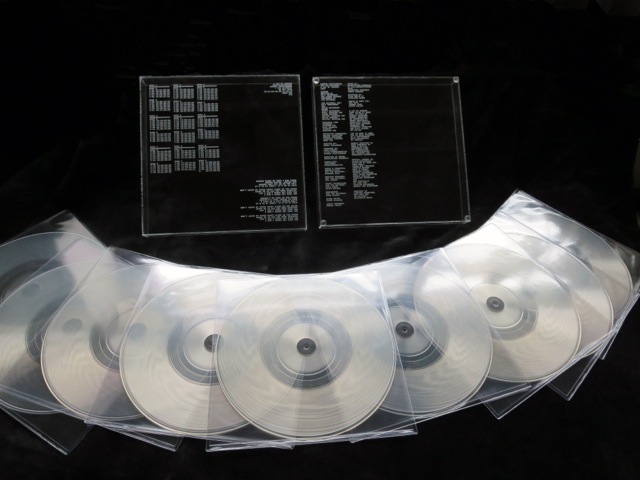
No one ever accused me of feeling in moderation. If you think I am apathetic it’s only because in that moment I’m feeling another emotion just as strongly if not more so. Thus when The National decided to release a limited edition vinyl box set of their six hour performance repeating one of my all time favorite songs over and over and over and over again, I never thought twice. This was not one of my normal trappings, an impulse buy to be second guessed at a later date. This was something I needed, as sure as the water needs the clouds. As sure as it needs the rain. It is one of those things that hardly anyone understands about me, something I try to explain but end up falling short every time. Just try to understand that this band, this song, this box set makes me whole.
I want to say right now that a project consisting of “Sorrow” sung 105 times in a row at the MoMA in New York with Icelandic artist Ragnar Kjartansson is pretty darned hipster as all hell. Even the band called the idea “artsy-fartsy” and the New York Times called it an unimaginable and dangerous act. I’m not going to lie to your face and tell you this is a record everyone needs to hear. What I will try to persuade you of is the idea that performance and endurance art can be powerfully beautiful. If it’s not something that appeals to you, at the very least acknowledge and respect the idea. Go ahead! Take a paltry look at seven minutes of the six hour effort:
Those are only 2 of the 105 iterations of the song. It’s very hypnotic and lends itself easily to multiple repeat listens. I initially thought that a live blog update would be appropriate, but that idea has been done. My writing is not prone to the quick update, but rather the drawn out thought process. It is something that I enjoy dwelling on, because then I am at my most genuine and most adequate. So I suppose I’ll do a combination of both.
I began this post when I started to cry at the first notes. As soon as it began I knew I had to write/type/anything to unleash the feelings within me. I struggled to pull the disc out of the sleeve; it is clear and has both a plastic square sleeve and round, harder plastic protector. I am now on the second side and I think I should start to take the second disc out of it’s cocoon since the first one was a bit of a challenge. Hold on! It’s a little over halfway on side B and they changed it up! Because this is so repetitive every slight change feels monumental and sounds really amazing. It’s like having mini solos and it really succeeds in keeping the listeners attention.
I have to admit, I am not even done hearing the second vinyl disc (of nine), and my attention is starting to wane. Naali, my dog, asked me to go out and I gladly obliged. There were two squirrels eating the bird suet and Naali straight up bolted. I smiled at her exuberance, and while I heard it constantly in the background, I returned my full attention to “Sorrow” with the joy of running free.
Side D: I wonder what it was like to see this live. You’re right, Matt Berninger, I don’t want to get over you.
My sister called and I ended up talking about Asberger’s for a long while. She’s currently working at a camp with children who have the syndrome, and it is very intense. It made me wonder about social constructs and about how we separate non-verbal communication from “normal” conversation. Furthermore, what makes for boring conversation at all? Is it just our personal perception? This side E is much more stripped down and truly beautiful.
Side F: This is crazy nuts. This is a frigging band playing the same song over and over and over again. BUT DONT LEAVE MY HYPER HEART ALONE. I will never get over you. Oooooooooooooooooooooo….. They are super changing it up now!!!! I love it. Sorrow will always wait, and Sorrow will always win.
The best thing about live music is that it is the most perfect way to experience it. The band/musician/orchestra performs the music directly to you and then it’s gone. Even if you were to grab a recording it still is not the same as being there. Having something, however, is better than nothing, and the primary purpose of live recordings is so we can live vicariously through them. Trying to relive the memories or pretend that we were there.
A Lot of Sorrow is not like this. By repeating the same song over and over again for six hours it feels real. I committed to the whole thing and by the end, I could probably lie with a straight face and say I was in New York for the performance. I feel like an initiated, like I belong in an exclusive club. Which I’m sure I am. Not too many people can say they have set aside a fourth of their day and listened to this record. The exclusivity is part of the appeal, but that is too cynical for me. This box set is more than just a bargaining chip.
The pure, blissful and cathartic qualities of this song are magnified to the point where it feels like I’m standing on a beach with my feet in the sand. Six hours of “Sorrow” isn’t a tsunami, it’s 105 perfect waves hitting the land and then gently pushing and pulling sand around my toes. Repetitive yet immeasurably pleasurable stimulus constantly bordering on transcendental ecstasy.
We’re going to do one encore tonight, this one’s called ‘Sorrow.’
Third Eye Blind never released an amazing album. They had four (Dopamine makes it five) good LP’s with at most two thirds of the songs being better than average. And let us be real here, some of those songs are storied heroes, but some of them are complete crap as well. Take their best selling release for example. Their self-titled debut has three indisputable classics: “Jumper,” “How’s It Going To Be,” and “Semi-Charmed Life.” On the flip side, it is a record that contains “Thanks a Lot,” “Burning Man,” and “Good For You.” These three may as well be a huge spike strip tearing the tires off an American-built juggernaut which would otherwise be speeding towards Mount Olympus for 90’s album deification.
Dopamine keeps that streak alive and well, and it unfortunately–even after all these years–only manages to prove that Third Eye Blind (3EB) will always be a famous 90’s band known almost solely for their singles and not a coherent album. This obviously is not a damning statement. Their fifth studio album–the band’s first in six years–has some quintessential 3EB songs that are worth holding on to.
Despite all the talk about 3EB capitalizing on millennial 90’s nostalgia, Dopamine’s keepers are not just predators of sentimental value. That would be a fair point had this record been complete trash. It is a bummer that the album begins with “Everything is Easy,” a song that definitely feels like 3EB is playing villainous puppet master with millennial heartstrings. It sounds like the band, but does not feel like the band. “IT’S A TRAP!” Admiral Ackbar screams. It very well may be, but whatever, loyal fans will ride out the storm regardless. Good thing those other two eyes are still work. What the band did right in their heyday isn’t easy to duplicate, but they manage to recycle it, often to powerful effect.
Track number two is a beautiful example, and after the opening song feels simultaneously like a sigh of relief and a punch to the stomach. “Shipboard Cook” reminds everyone that 3EB lyrics are bittersweet diamonds in the rough: they don’t seem like much when you first hear them, but they come back around and you realize how poetic they are. But only after they’ve ripped your heart out. At no time does this hold more true than during “Blade.” For those who remember “God of Wine,” or “Slow Motion,” “Blade” is their equal in calamitous and passionate imagery. A bold statement, but the lyrics speak for themselves.
Stephan Jenkins, the main singer/songwriting member of 3EB, is a brilliant poet who can provoke intense thoughts with violent, devastating lyrics. It’s always difficult for a band to remain relevant over the span of decades, but those who do almost always have a genius songwriter who first and foremost uses the power of lyrics to propel the music forward. Alas, 3EB has never been flawless, Jenkins least of all. He is constantly dogged by lawsuits from former band members who accuse him of being a greedy egotist.
Perhaps the staggering weight of dealing with all ten former band members, including those he fired from the band, finally caught up with Jenkins. On the penultimate song, “Exiles,” he writes, “Are we breaking up the band? / The naturals of dark arts / I think we like the feeling of falling apart.” Unsurprisingly, it ends up being a half-assed apology, if it can even be called that. He later sings, “Well I remember everything I said / And I don’t take it back / In the silence of this breakup all my cracks are exposed / And then the night goes black on black.”
At the end of the day, Jenkins is still the same person he always has been for 3EB’s 22 year lifespan. He is a bipolar songwriter who even in his flashes of brilliance held on stubbornly to his flaws. This album is purportedly the band’s last, so after this wave of nostalgia disappears and 3EB ends its current overpriced tour, they are done. Too bad Jenkins decided to keep some songs off this album. For those die-hards who remember the long-lost “Persephone” and “Second Born” and had hoped they would be on this album, we’ll just have to come to terms with the fact that 3EB never reached their full potential. There are a couple amazing songs on Dopamine, but that third eye will always be blind, for better and for worse.






 The Ponderings of a Deej